Introduction
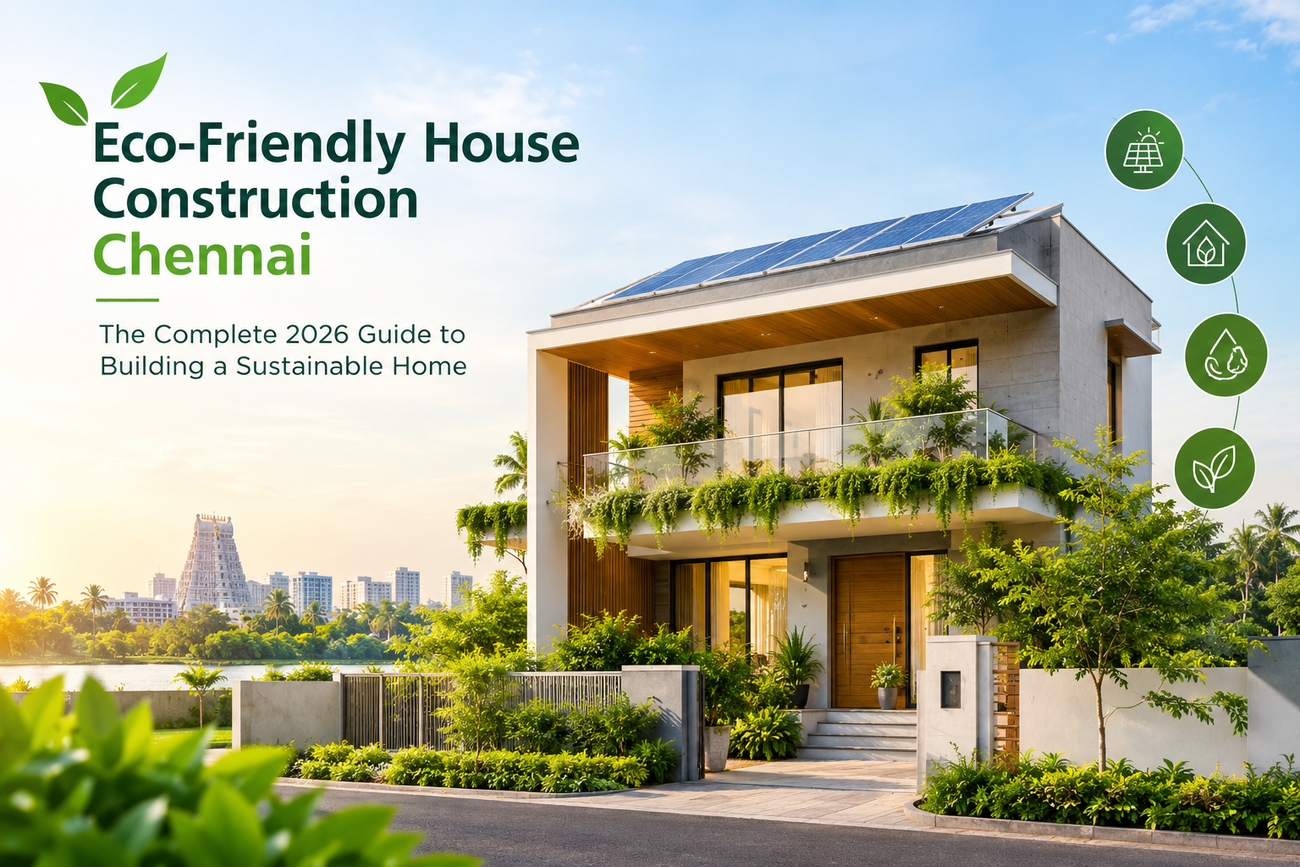
Chennai’s summers keep getting longer. EB tariffs keep climbing. The city’s groundwater table keeps dropping a little further every dry season. Against that backdrop, eco-friendly house construction in Chennai has moved from a niche preference to a practical necessity for anyone building on their own plot in 2026. This isn’t about installing a few solar panels for show. It’s a set of material, design, and system choices made at the drawing-board stage, not patched in after handover. Done right, these choices cut your electricity bill, reduce your dependence on tanker water, and keep your home cooler without running the air conditioner all day. This guide walks through what genuinely sustainable construction looks like in Chennai, what it costs, and where homeowners usually go wrong.
Understanding Eco-Friendly House Construction in Chennai
Eco-friendly house construction means designing and building a home that uses less energy, less water, and fewer virgin raw materials over its lifetime, without giving up structural strength or comfort. In the Chennai context, that means a fairly specific checklist. Orientation and ventilation get planned around the coastal climate. Wall and roof materials offer better thermal performance than standard fired clay brick. A rainwater harvesting system gets sized correctly for the plot. Increasingly, rooftop solar with net metering rounds out the list. None of these ideas are unusual or hard to source. Most are available through any competent residential construction company in Chennai. The real skill lies in specifying them correctly and sequencing them into the build, instead of retrofitting them later at double the cost.
Why Eco-Friendly House Construction Matters for Property Owners in Chennai
Three Chennai-specific pressures make this more than an environmental talking point.
First, water. Chennai has lived through severe shortages in the past decade. The Chennai Metropolitan Water Supply and Sewerage Board now requires functional rainwater harvesting structures for every building applying for a new water or sewer connection, regardless of size.
Second, heat. Chennai’s summer temperatures regularly cross 38–40°C. A home with poor thermal design runs its cooling load, and its EB bill, noticeably higher than a home designed around passive cooling.
Third, resale and rental value. Buyers and tenants increasingly ask about solar readiness, water security, and material quality before they ask about floor finishes. A house built with eco-friendly principles from day one tends to hold its value better than one that treated sustainability as an afterthought.
Top 10 Elements of Eco-Friendly House Construction in Chennai
1. Passive Solar Orientation and Cross-Ventilation
Before a single brick is laid, your architect should map your plot against the sun’s path and Chennai’s prevailing sea breeze. Positioning larger openings to catch the south-west breeze, and limiting direct west-facing glazing, reduces indoor heat gain significantly. That cuts your dependence on air conditioning through most of the year.
2. Fly Ash and AAC Blocks Instead of Conventional Clay Bricks
Fly ash bricks and Autoclaved Aerated Concrete (AAC) blocks use industrial by-products instead of mined clay. They fire at lower temperatures, or not at all, and insulate noticeably better than solid clay brick. The Bureau of Indian Standards has a dedicated specification, IS 12894:2002, governing the manufacture and quality of these bricks. Check it with your builder before materials get ordered.
3. Rainwater Harvesting Built Into the Structural Design
Rainwater harvesting in Chennai isn’t optional. It’s a civic requirement tied directly to your water connection. The smarter approach designs the recharge pit, storage sump, and collection piping into the foundation and plumbing layout from the start, rather than digging up a finished driveway later. CMWSSB publishes detailed technical guidance on sizing these systems correctly for Chennai’s soil conditions.
4. Rooftop Solar With Net Metering
A grid-tied rooftop solar system, sized to your sanctioned load, can meaningfully offset your EB bill. Central subsidy support under the PM Surya Ghar scheme currently brings down the upfront cost for eligible homeowners. Plan structural provision for panel mounting and conduit routing during the RCC stage, not after.
5. Low-VOC Paints and Finishes
Conventional paints and adhesives off-gas volatile organic compounds for months after application. This affects indoor air quality directly. Low-VOC and water-based paints cost a little more per litre but noticeably improve air quality inside a newly built home, especially in bedrooms and children’s rooms.
6. Energy-Efficient Windows and Glazing
Double-glazed or UPVC-framed windows with a good U-value reduce heat transfer through openings. In Chennai’s climate, openings are often where the largest cooling losses happen. Even a single upgrade, like reflective or tinted glass on west-facing windows, makes a measurable difference to indoor temperature.
7. Greywater Recycling and Sewage Treatment
Separating bath and wash-basin water from black water, then treating it for reuse in flushing or gardening, is now a documented requirement for special and multi-storey buildings under Chennai’s building rules. Even independent houses benefit from a simple greywater loop, especially on plots without a municipal sewer connection.
8. Locally Sourced Materials
Sourcing aggregates, blocks, and stone from suppliers within or near the Chennai Metropolitan Area cuts transport-related emissions. It often cuts cost too, and it reduces the lead-time risk that comes with materials trucked in from other states.
9. Cool or Vegetated Roofing
A light-coloured, reflective roof coating, or a partial terrace garden, reduces the heat absorbed by your RCC slab. That lowers the temperature of the floor directly below it. This is one of the lowest-cost interventions on this list, and one of the most noticeable in daily comfort.
10. Design Aligned With IGBC Green Homes Principles
Formal certification isn’t required to benefit from the framework. The Indian Green Building Council’s Green Homes rating system lays out a structured checklist covering site planning, water efficiency, energy performance, material selection, and indoor environmental quality. Any architect can use it as a design reference, even for an uncertified home.
Common Mistakes to Avoid in Eco-Friendly House Construction
- Treating sustainability as an add-on after the drawings are finalised. Retrofitting solar conduit, rainwater piping, or greywater lines into a completed structure costs far more than planning them into the original layout.
- Choosing materials on price alone. A slightly cheaper block or paint that fails on thermal performance or air quality defeats the purpose of building eco-friendly in the first place.
- Ignoring orientation to maximise built-up area. Squeezing every square foot onto a plot without regard for sun path often means fighting heat gain with air conditioning for the home’s entire life.
- Skipping a proper soil and rainfall assessment. An undersized recharge pit fails to perform and can still leave you non-compliant on paper.
- Assuming any contractor can execute a green specification. Fly ash block masonry, greywater plumbing, and solar-ready electrical layouts require specific site experience. Not every team that builds a standard house has done this work before.
How to Choose the Right Partner for Eco-Friendly House Construction in Chennai
Look for a builder who can show you completed sites using the materials and systems described above, not just a slide with green buzzwords. Ask direct questions. Which brand and IS standard governs the blocks they’ll use? How do they size the rainwater harvesting pit for your specific plot and soil type? Do they build structural provision for solar panels into the RCC design, or is that a separate afterthought? A transparent construction company in Chennai answers these in writing, as part of your itemised estimate, before you sign anything – the same way they itemise cement grade, steel brand, and waterproofing membrane.
Why Dwellvise Developers Can Help With Eco-Friendly House Construction in Chennai
Dwellvise Developers builds residential and commercial projects across Pallikaranai, OMR, and South Chennai with the same in-house engineering team from soil testing through final handover. That matters directly for eco-friendly construction, where orientation, block selection, and utility routing all need coordination at the design stage rather than a patch later. Dwellvise’s written, itemised estimates specify material brands and grades upfront. If you want fly ash blocks, a properly sized rainwater harvesting system, or solar-ready electrical provision, your contract documents it instead of leaving it as a verbal promise. Homeowners who’ve read our guide on budget house construction in Chennai will recognise the same principle here: sustainable choices and cost discipline aren’t opposites when you plan them in from day one.
Frequently Asked Questions
Does eco-friendly house construction cost more than a standard build in Chennai?
Some materials, like AAC blocks or low-VOC paint, carry a modest premium over the cheapest conventional options. The gap narrows significantly once you factor in lower long-term EB and water costs. A well-planned build also avoids the much higher expense of retrofitting solar or rainwater systems later.
Is rainwater harvesting really mandatory for independent houses in Chennai?
Yes. CMWSSB requires functional rainwater harvesting structures for any building connecting to the municipal water or sewer network, regardless of size, and inspectors generally check this before issuing a completion certificate.
Can I get a subsidy for rooftop solar on a new house in Chennai?
Eligible homeowners can currently apply for support under the central PM Surya Ghar Muft Bijli Yojana scheme through TANGEDCO’s Unified Solar Rooftop Portal, subject to load, ownership, and installer eligibility conditions.
What is the difference between fly ash bricks and AAC blocks?
Fly ash bricks are denser, solid units made largely from a thermal power plant by-product. AAC blocks are lighter, aerated concrete units with higher insulation value. Both outperform standard clay brick on sustainability and thermal comfort; the right choice depends on your structural design and budget.
Do I need IGBC certification to call my house eco-friendly?
No. Formal certification is optional and mainly relevant for larger developments seeking a marketable rating. Most independent homeowners simply apply the IGBC Green Homes framework as a design checklist without pursuing the certificate itself.
How much can passive design actually reduce my cooling costs?
The exact figure depends on plot orientation, window placement, and roof treatment. Homes designed around cross-ventilation and shaded west-facing walls consistently run cooler indoors than comparable homes without this planning, which reduces daily air-conditioner use.
Which construction stage is the right time to plan eco-friendly features?
The design and structural drawing stage, before foundation work begins. Orientation, rainwater piping routes, solar conduit, and block selection all need to lock into the drawings early. Adding them after the structure is up is far more disruptive and expensive.
Final Thoughts on Eco-Friendly House Construction in Chennai
Eco-friendly house construction in Chennai isn’t a separate category of building. It’s what a well-planned, well-specified home in this climate should look like by default. The choices that matter most – orientation, block material, rainwater system sizing, and solar readiness – all get decided at the drawing-board stage, long before finishes and fittings enter the conversation. Get those decisions right with a construction partner who documents them in writing, and the sustainability follows naturally, without inflating your budget. If you’re planning a build in Chennai and want these specifications built into your estimate from day one, request a free site visit and written cost estimate from Dwellvise before you finalise your drawings.
